Zaproszeni prelegenci
Marginal Seas – The Szczecin Concept
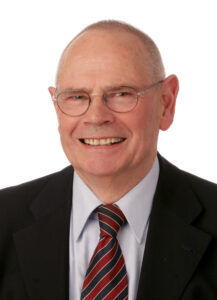 Prof. Dr. Jan Harff
Institute of Marine and Environmental Sciences, University of Szczecin
Abstract
As highly sensitive areas of the world ocean, marginal seas are particularly exposed to the pressure of climate change, but also to anthropogenic influences due to the increasing economic use of the seas, their coasts and drainage areas. In order to protect the fragile ecosystems and habitats and at the same time ensure sustainable use of the valuable marine resources, new holistic management approaches based on models of the complex functioning of the marginal seas are required. Interdisciplinary and international research in this advanced scientific field began at the University of Szczecin about fifteen years ago. As a location where several relevant university institutes, research facilities and a maritime university are located, Szczecin is particularly suitable for this research area – geologically at the intersection of the European Basin, the East European Plate and the Fennoscandian Shield, culture-geographically located between Scandinavia, Eastern and Central Europe and economically on the main waterway between the Baltic Sea and the Atlantic Ocean. At the Institute of Marine and Environmental Sciences of the University of Szczecin, a complex approach to describe the interaction between climate, geosystem, ecosystem and socio-economic systems for marginal seas was developed together with partners from Poland, China, Estonia, Germany, Italy, Lithuania, South Africa, Sweden, Great Britain and the USA. This approach serves as the basis for the numerical generation of scenarios as reconstructions of the geological past of marginal seas during the Last Glacial Cycle as well as future projections under the influence of climate change. The key area is the Baltic Sea, one of the worldwide best-studied marginal seas. Comparisons with other marginal seas, such as the South China Sea, are first step towards generalizing individual diversity. Next steps will focus on river mouth systems – the main interfaces between marginal seas and drainage areas.
Short Biography
Jan Harff studied at the Humboldt University from 1964 and received his diploma as a geologist from the University of Greifswald in 1969. He received his doctorate there in 1974 and then worked at the Central Institute for Earth Physics of the Academy of Sciences of the GDR where he developed with his team mathematical models for the North German-Polish Basin. After the fall of the Berlin Wall, he turned to marine geology and became head of the Marine Geology Section at the Leibniz Institute for Baltic Sea Research (IOW) in Warnemünde, Germany. At the same time, in 1993, he became Professor of Marine Geology at the University of Greifswald. Among other topics, he studied the Baltic Sea’s basin development, in particular its coasts during the Quaternary. He also spent time as researcher and guest-professor abroad in China, Vietnam, the USA, Poland, Lithuania and Russia. He was chief scientist of several oceanographic expeditions with research vessels in the Baltic Sea and West Greenland. In 2008 he retired in Germany and spent two years as “Humboldt Honorary Research Fellow” of the Polish Science Foundation at the University of Szczecin before he became professor at the University of Szczecin, where he established an international scientific network for marginal seas research. Among other awards, he received: William Christian Krumbein Medal of the International Association for Mathematical Geosciences (1996); Serge von Bubnoff Medal, Association for Geo-Sciences of Germany (2009); Award Medal, University of Szczecin (2013); International Science and Technology Cooperation Award of the People’s Republic of China (2013); Medal za Zasługi „Mente et Maleo”, Państwowy Instytut Geologiczny (2016) and West Pomeranian Nobel Award, discipline Marine Sciences (2021).
Marine Sedimentary Records of Terrestrial Climate Change in Major River Basins
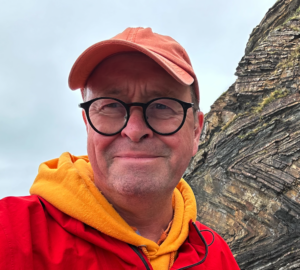 Prof. Dr. Peter D. Clift
Royal Society-Wolfson Fellow, Department of Earth Sciences, University College London, UK
Abstract
Deep sea sedimentary sequences can be powerful archives for recording the evolution of climate and in the case of clastic sediments eroded from the continents they can be used to reconstruct the development of environmental conditions, including precipitation, seasonality and vegetation from the areas from which the sediments is being derived. In order to interpret these deep sea deposits for environmental research it is first important to understand how how they are transported from their sources to the depositional centre and what extent there are significant lag times in this process. Sediment carried in suspension can be transported rapidly from the source to the ocean and may be deposited offshore within a relatively short amount of time, although these sediments are then liable to being reworked during periods when sea level falls. Conversely coarse-grained sediment travels to the ocean relatively slowly often over thousands of years in the case of large river basins so that deposits significantly post date the processes that affected the source region in the first place. Redeposition into the deep sea such as a submarine fan is then further delayed by buffering on the continental shelf prior to redeposition. During the redeposition sediments are mixed with other deposits so that it is not realistic to obtain a high resolution erosion or climatic record. However, over longer periods of time (>1 m.y.) this may be derived. In general hemipelagic sediments often provide a more robust and more readily interpreted environmental record compared to submarine fans where deposition by mass wasting and turbidity current is more common. I shall present examples from the Asian marginal seas showing how hemipelagic deposits provide a robust record of environmental evolution under the influence of Asian monsoon whereas environmental information from submarine fans is more difficult to interpret.
Short Biography
Peter Clift grew up in Southern England. He did his bachelors degree at the University of Oxford followed by a PhD at the University of Edinburgh where he studied the tectonics of Southern Greece. Subsequently, he became involved in scientific ocean drilling and moved to work at Texas A&M University for the Ocean Drilling Program after a postdoc. He spent 10 years working on the marine geology of rifted margins at the Woods Hole Oceanographic Institution before moving to the University of Aberdeen in 2004 where he was Professor of Geology. Throughout this time he has devoted his research to the marine and terrestrial geology of Asia and in particular the growth of mountains and the development of the monsoon system. In 2012 he moved to Louisiana State University where he was the Charles T McCord Chair of Petroleum Geology. In 2023 he began a new position at University College London where he is the Royal Society-Wolfson professorial fellow. He continues to work on Asian marine geology in particular the influence of chemical weathering on global climate. Clift is a fellow of the Geological Society of America and in 2023 was the recipient of the Geological Society of London Lyell Medal. In 2024 he was elected fellow of the American Geophysical Union.